

Standert
or
How We Learned
To Stop Worrying
And Love The Welds
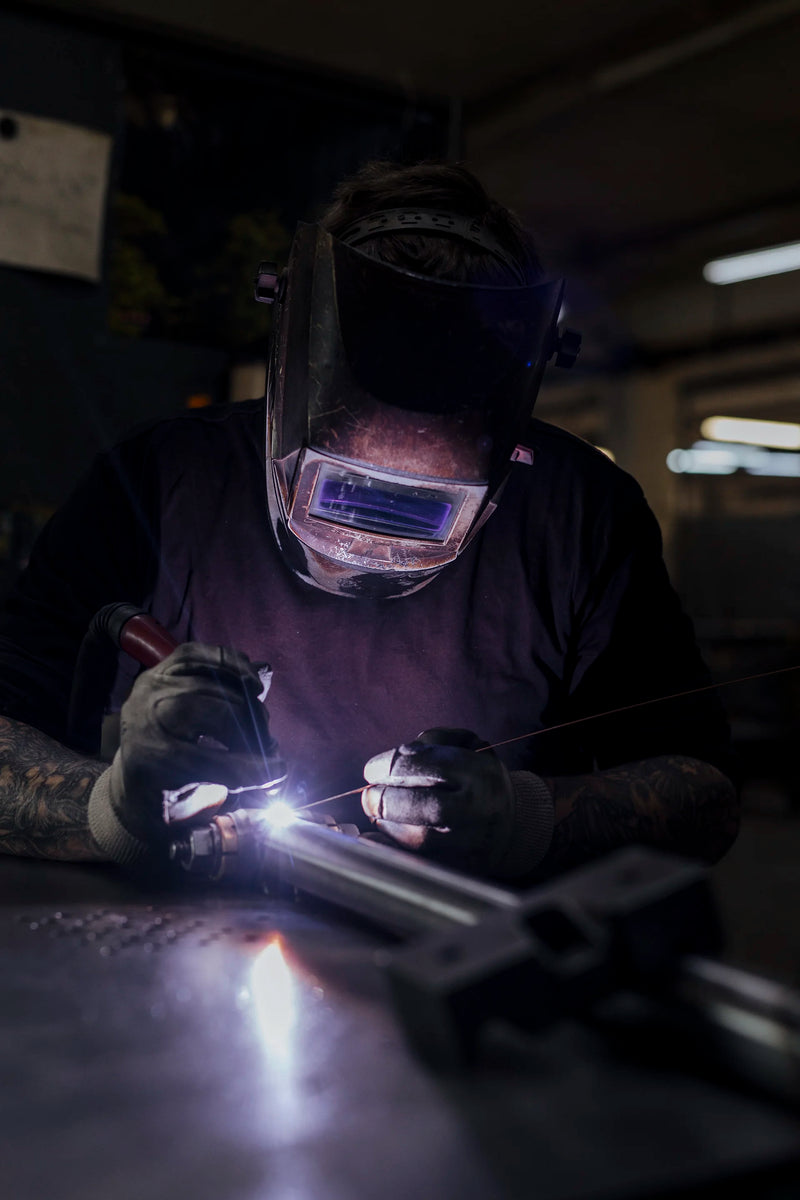
Of course we’re a romantic bunch but, importantly, the decision is much more than simply an emotional one. It’s a matter of quality, durability and sustainability too. To achieve the smooth, invisible welds on an Aluminium frame, they have to be ground down. The welds are then coated in with an epoxy filler which can be smoothed for a flush appearance, but adds zero mechanical benefit. It’s a process which removes the original, structural material and adds environmentally dubious chemical material, compromising the integrity and durability of the weld. Somehow simultaneously reductive and additive, but ultimately only less authentic, like an apology for being made of the wrong material. This goes against the values of quality, durability, sustainability and authenticity all in one.
There is also a perception, by some, that the presence of visible welds is a marker of low quality, or that the quality of the welds can be determined by certain aesthetic standards. This couldn’t be further from the truth. By choosing to leave the welds in their original state, we leave ourselves nowhere to hide. The welds must be high quality every time, because a sub-par or messy weld can’t simply be covered up. There is no “fixing it in post” here. The visibility of our welds are a testament to their quality.
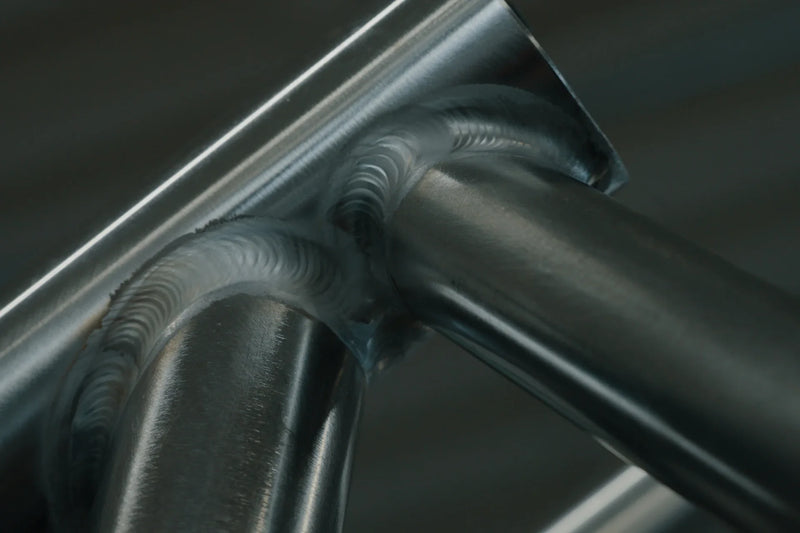
The aesthetic tastes of super smooth or small welds do not necessarily correspond to the quality of welding either. Different materials, joint types and structural requirements all demand different weld types and the fundamental “quality” can’t be judged solely on appearance. For example, the welds on our Pfadfinder are already hardly visible, which is both a combination of the incredible craftsmanship of our Czech manufacturing partner and the material (the bead profile on steel welds is typically much smaller than that found on Aluminium). Continuing on aesthetics; when raw finishes on carbon fibre bikes became popular, many people were at first shocked by the seemingly messy or random layup of unidirectional sheets, mixed with 3K weaves around tube junctions. But tastes have adapted and it is accepted that this is how high-quality carbon fibre frames are typically made. Why would a manufacturer gladly expose these features if they betrayed the quality of their product? We feel exactly the same about our welds and honestly believe you should too. Standert doesn’t make alloy bikes dressed up as carbon, we make metal bikes full stop.
What should really matter is the ride and how it makes you feel. If you ride a Standert, we’re sure you won’t be thinking about welds any more.
